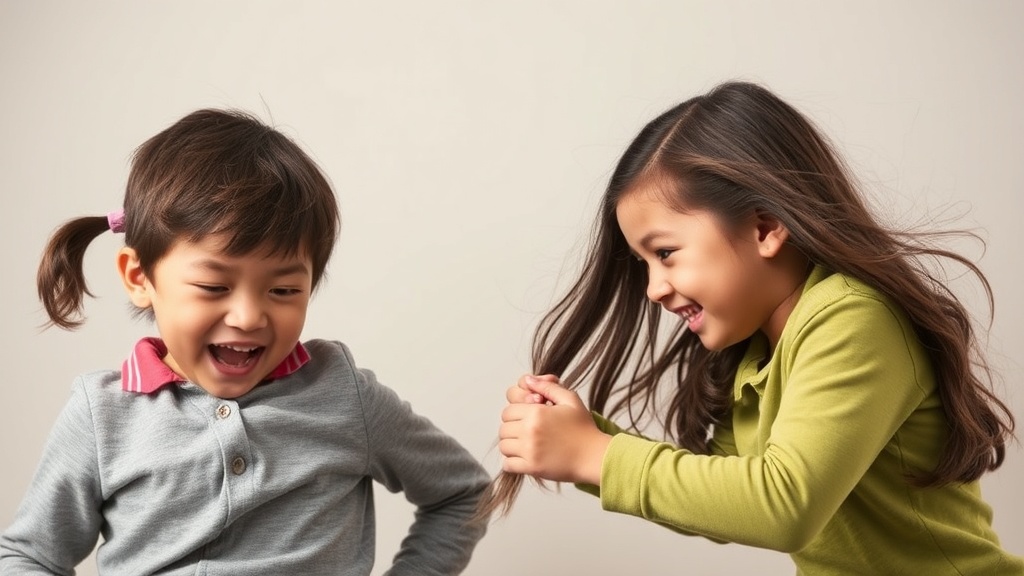
Why Do Siblings Fight Over Nothing? 7 Real Reasons Behind the Chaos

The Real Cost of Sibling Conflict — And Why It Matters
Here's something that might catch you off guard: children with high-conflict sibling relationships are three times more likely to develop depression and anxiety later in life than those who learn to resolve disputes at home. That's not meant to scare you — it's a wake-up call. The bickering over who touched whose toy isn't just noise. It's practice for how your kids will handle conflict for decades to come. This post breaks down seven genuine reasons siblings fight — not the surface-level stuff, but what's actually driving the drama — along with what you can do about it without turning into a constant referee.
Why Do Siblings Fight Over Nothing? Understanding the Real Triggers
Let's be honest — sometimes it feels like your kids will argue about literally anything. The color of the sky. Who breathed louder. Whether the cat likes one of them more. (Spoiler: the cat doesn't care.) But "nothing" fights are rarely about nothing at all. They're usually about something deeper — attention, status, or unmet needs that your children can't articulate yet. When a five-year-old screams because their sibling "looked at them funny," what they're often saying is: "I feel powerless and I need to assert myself somehow." Recognizing this distinction changes everything about how you respond.
Is Sibling Rivalry Normal — Or Should I Be Worried?
Yes. And also yes. Some conflict is absolutely developmentally appropriate — even healthy. Siblings are practice partners for the real world. They learn negotiation, compromise, and (eventually) empathy through these fraught interactions. But there's a line between typical rivalry and destructive conflict. Research from the Mayo Clinic suggests you should step in when disagreements become physical, when one child is consistently dominated or humiliated, or when fighting interferes with daily functioning. The goal isn't zero conflict — it's teaching your kids how to work through it without leaving emotional scars.
7 Real Reasons Your Kids Can't Stop Fighting
1. They're Competing for a Limited Resource — Your Attention
This is the big one. Your time and attention are finite (much as we wish they weren't), and kids know it. When a new sibling arrives, the older child doesn't just lose some attention — they lose the entirety of your focus that they once had. That loss is real, and it stings. Even years later, kids will pick fights to pull you into the ring. Negative attention is still attention — and sometimes that's better than none at all. Watch for patterns: do fights spike when you're on your phone? When you're focused on a work call? That's not coincidence.
2. Fairness Feels Like Survival to a Child
Adults understand that fair doesn't always mean equal. Kids do not. To a child, getting a slightly smaller piece of cake isn't just disappointing — it feels like evidence that they're loved less. Their brains are wired for equality as a proxy for security. When you hear "That's not fair!" for the hundredth time today, remember: they're not being dramatic. They're testing whether their place in the family is secure. Explaining your reasoning helps — but only after you acknowledge that their feelings make sense.
3. They're Figuring Out Their Place in the Family Hierarchy
Birth order shapes us more than we like to admit. Firstborns often feel displaced and overcompensate by being bossy. Younger siblings feel underestimated and push back by being disruptive. Middle children — well, they're just trying to be seen at all. These roles aren't destiny, but they are powerful scripts that kids unconsciously follow. Your firstborn isn't trying to be controlling when they micromanage their sibling's LEGO build. They're trying to reclaim some authority in a world where they suddenly have very little.
4. They're Overstimulated and Don't Know It
Here's what nobody tells you: sibling conflict spikes dramatically when kids are tired, hungry, or overwhelmed. Their prefrontal cortex — the part responsible for impulse control — is basically offline. What looks like malicious antagonism is often just two depleted kids bumping into each other (literally and figuratively) because they lack the bandwidth to do anything else. This isn't a character problem — it's a biology problem. The solution isn't better behavior management. It's better environment management.
5. They're Modeling What They've Seen
Kids are expert observers and terrible interpreters. They watch how you handle conflict with your partner, with other family members, even with customer service representatives on the phone. If they see raised voices working — if they see that the loudest person gets their way — they'll try that strategy too. The good news? This means you have more influence than you think. The hard news? You have to practice what you want them to learn. Zero to Three has excellent resources on modeling emotional regulation for young children.
6. They Need Help Developing Conflict Skills
We often assume kids "just know" how to share, take turns, or compromise. They don't. These are learned skills — and most children need explicit teaching. When siblings fight, they're often frustrated because they genuinely don't know how to get what they want without force. Your job isn't to prevent all conflict. It's to coach them through it enough times that they start internalizing the playbook. Think of yourself as a sports coach watching practice — you don't play the game for them, but you do stop play to explain the rules when things get out of hand.
7. They're Stuck in a Pattern They Can't Break
Sometimes siblings fight because — well, because they've always fought. The dynamic becomes self-reinforcing. Big sister expects little brother to be annoying, so she preemptively snaps at him. He learns to expect her hostility, so he goes on the offensive. Rinse and repeat. Breaking these patterns requires interrupting the script. Try separating them before the usual trigger times. Or — counterintuitively — assign them a shared task that requires cooperation. Novel contexts can shake loose old dynamics in surprising ways.
What Actually Works When You Need to Intervene
Most parenting advice about sibling conflict focuses on what not to do — don't take sides, don't compare, don't play favorites. All true. But what should you do? First, separate the kids physically if emotions are running hot. Nobody learns when they're flooded with adrenaline. Then — and this is the part we often skip — check in with each child individually. Not to assign blame, but to understand what happened from their perspective. Finally, help them generate solutions together. "What could you do differently next time?" is infinitely more valuable than "Say you're sorry" (which they'll mutter while plotting revenge).
When Should I Get Professional Help for Sibling Conflict?
Most sibling rivalry resolves with time and consistent parenting. But sometimes you need backup. Consider reaching out to a family therapist if one child is consistently the aggressor and the other is consistently victimized, if conflicts are escalating in intensity or frequency, if fights are affecting school performance or friendships, or if you find yourself dreading being home with your kids. There's no shame in asking for help — in fact, modeling that behavior might be one of the best lessons you teach them.
Building Sibling Bonds That Last Beyond Childhood
The goal isn't perfect harmony. (Families who appear to have perfect harmony are usually just good at hiding the chaos from outsiders.) The goal is helping your kids develop a relationship that can weather conflict — one where they know disagreement doesn't mean disconnection. Research consistently shows that adult sibling relationships are strongly predicted by childhood experiences. The way they learn to fight now shapes whether they'll be close later — or strangers who happen to share DNA. That's high stakes, sure. But it's also an opportunity. Every messy, frustrating conflict is a chance to teach skills that will serve them for life. Some days that perspective won't make the screaming any easier to hear. On other days — the good days — it'll be exactly what keeps you sane.