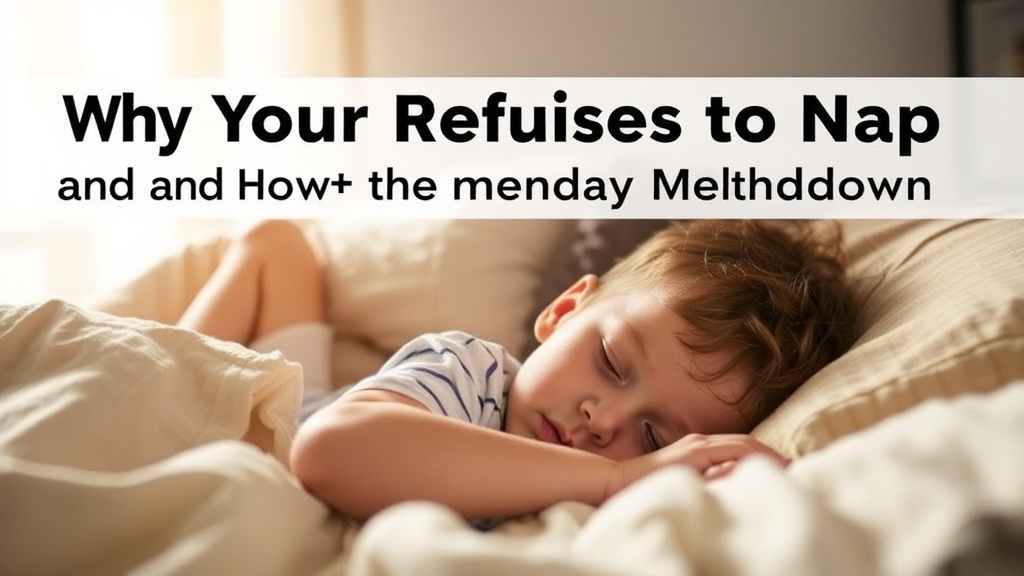
Why Your Toddler Refuses to Nap and How to Fix the Midday Meltdown

The Midday Struggle is Real
It is 1:30 PM on a Tuesday. You have finally finished a mountain of laundry, the house is relatively quiet, and you are looking forward to a moment of peace. Then, it happens. The first tear falls. Then the scream. Soon, your seemingly energetic toddler is having a full-blown meltdown on the living room rug, refusing to even look at the crib or the nap mat. This isn't just a tired kid; it's a complete breakdown of the daily rhythm that leaves you feeling defeated and exhausted. Understanding why this happens—and how to actually address the underlying developmental shifts—is the difference between a chaotic afternoon and a predictable routine.
Naps aren't just about sleep; they are a developmental milestone that fluctuates constantly. As kids grow, their physiological needs change, and what worked three months ago might be completely useless today. We're looking at why these transitions occur and how you can adjust your approach without losing your mind.
Why is my child refusing to nap?
The most common reason for a sudden refusal to nap is a developmental leap. When children hit a new milestone—like walking, talking, or even just a growth spurt—their brains are working overtime. This mental stimulation often makes them want to stay awake to practice their new skills rather than shutting down for a nap. It's not that they're being defiant; their brain is simply too busy being awesome to rest.
Another factor is the dreaded "nap strike." This often happens when a child's circadian rhythm is shifting. If your child is getting too much daytime sleep or if their bedtime has become too late, they might not have enough sleep pressure built up to fall asleep during the day. You might also see a refusal if the environment has changed—even something as small as a new brightly colored toy left in their line of sight can be a massive distraction for a developing mind.
Check out the American Academy of Pediatrics for more detailed info on sleep patterns and age-appropriate schedules. It helps to see the data behind why these shifts occur so you don't take the refusal personally.
How can I get my toddler back on a sleep schedule?
If you've hit a rut, you can't just keep doing the same thing and hope for a different result. You need to adjust the variables. Here are a few strategies that actually move the needle:
- Evaluate the Light: If your living room is bright and loud, the transition to a dark room feels like a punishment. Use blackout curtains to signal to their brain that the "active" part of the day is over.
- The Wind-Down Buffer: You can't go from high-energy play to a dark room in five minutes. Create a 15-minute buffer where the lights go low and the volume drops. This helps the nervous system settle.
- Watch the Food-Sleep Connection: A hungry toddler is a wide-awake toddler. Ensure their lunch is substantial enough that they aren't waking up because their tummy is rumbling, but avoid heavy sugar right before the nap attempt.
Sometimes, the issue is the physical environment. Is the room too warm? Is the white noise machine too quiet? Small adjustments to the sensory experience can make a huge difference in how easily they drift off.
What are the best ways to handle a midday meltdown?
When the refusal turns into a full-blown tantrum, your first instinct might be to get frustrated (believe me, I've been there). But a meltdown is often a sign of overstimulation or an inability to regulate big emotions. Instead of fighting the tantrum, try to de-escalate the situation.
- Validate, don't argue: Instead of saying "You need to sleep, stop crying!", try "I see you're really frustrated that we have to stop playing. It's hard to stop when you're having fun."
- Provide a Safe Space: If they are screaming, keep them in a safe, enclosed area like a crib or a darkened room. They need to learn that even when they are upset, they are safe.
- Use Low-Stimulus Interaction: Once the peak of the crying has passed, move in with a calm, quiet presence. Sometimes just sitting near them without saying a word is more effective than a long lecture.
It's also worth noting that the CDC milestone trackers can help you see if your child's energy levels or sleep needs are aligning with typical development. Knowing what is "normal" can take a lot of the anxiety out of these daily battles.
Remember, these phases are temporary. Whether it's a developmental leap or a simple change in their internal clock, the key is consistency and a willingness to pivot your strategy. You aren't failing; you're just navigating a very common, very loud, and very exhausting part of the parenting experience.
If you find that your child is truly struggling with sleep every single day, it might be worth a quick chat with your pediatrician to rule out things like iron deficiencies or other physiological factors. But most of the time, it's just a stage—a long, noisy, much-too-bright stage.